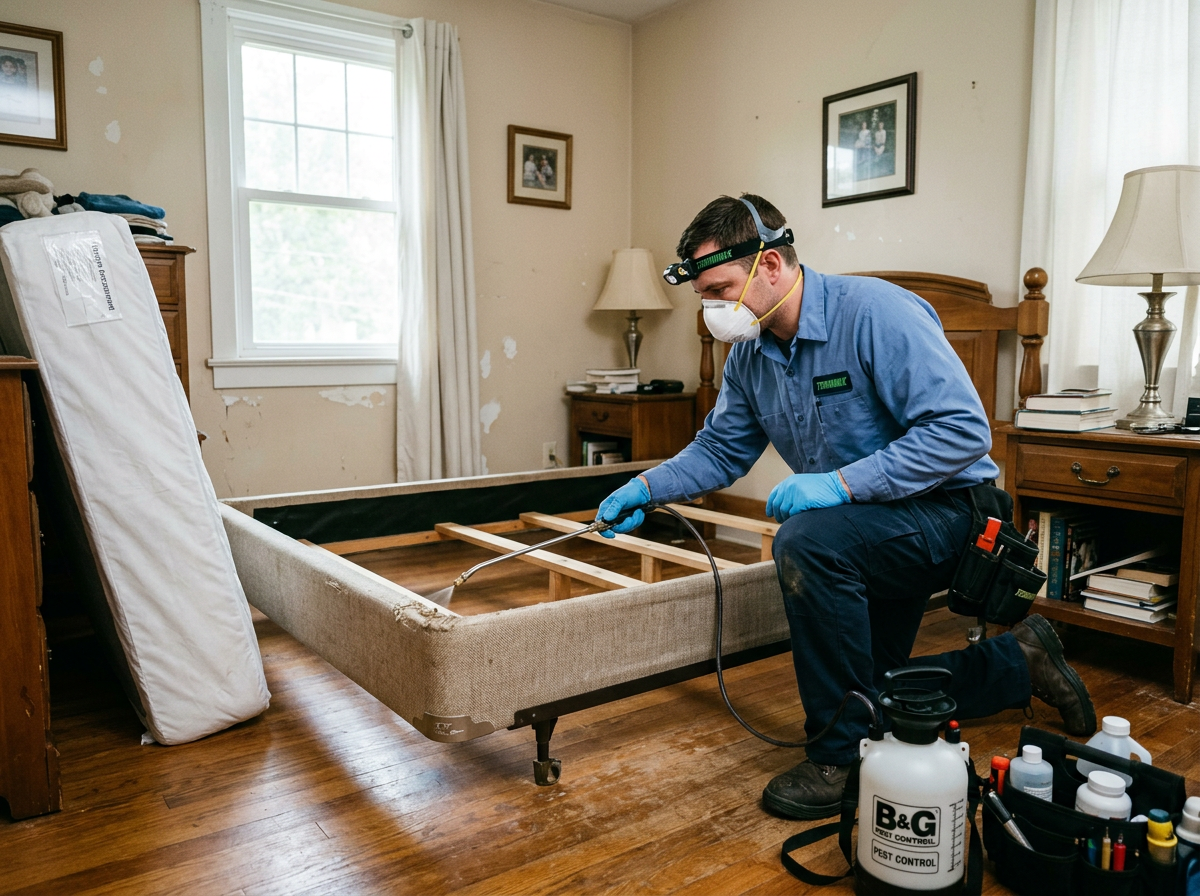
Bed bugs in Midlothian homes commonly harbor in mattress seams, behind headboards, inside box springs, and along baseboards of 1970s and 1980s ranch houses where small gaps allow easy movement between rooms. They also settle in electrical outlets, picture frames, and piled clothing or stored items in finished basements that stay warm year-round. These pests travel through shared walls in townhome communities and spread quickly when furniture is moved between households.
Heat treatment raises room temperatures to kill all life stages in a single visit but requires removing or isolating nearly everything that could trap heat or melt, while chemical applications use residual products on cracks and voids yet often need two or three follow-up visits because eggs hatch later. In Piedmont clay-soil areas where humidity stays high, chemical residuals can break down faster on certain surfaces, so technicians inspect for re-infestation signs before each return.
Success depends on homeowner preparation such as washing and bagging all bedding, decluttering floors, and moving furniture away from walls; without it, bugs simply relocate to untreated areas. Single-unit treatments frequently fail when bugs remain in adjacent units, so we always check neighboring spaces when possible and set realistic expectations that complete elimination can take several weeks of monitoring.
Technician insight
In Midlothian, the thing that catches most people out with Bed Bug Treatment is how bugs move through the hollow spaces behind baseboards and shared walls in 1980s townhomes near the James River, so treating only one unit often leaves the source untouched.
Midlothian Townhome Spread
Bites appeared in a guest room after family visited from out of state. Inspection found bugs in mattress seams and behind the headboard plus activity in the adjoining unit's baseboards. Heat was used in the primary bedroom while chemical spots treated the shared wall; follow-up monitoring confirmed no further activity.
Bed Bug Treatment Services We Offer
✓Heat Treatment
Whole-room heat application that reaches lethal temperatures in mattresses, furniture, and wall voids without leaving chemical residues.
✓Targeted Chemical Treatment
Residual insecticide applications to baseboards, outlets, and bed frames combined with follow-up visits to address newly hatched bugs.
✓Bed Bug Inspection
Detailed visual and monitoring inspection of sleeping areas, furniture, and common hiding spots to confirm activity and map the extent.
✓Mattress and Furniture Treatment
Direct treatment of mattresses, box springs, and upholstered pieces using approved products or encasements to protect sleeping surfaces.
✓Follow-Up Monitoring
Placement of interceptors and scheduled re-inspections to verify elimination and catch any remaining activity after initial service.
How it works
- 1
Initial Inspection
Technician examines all sleeping areas, furniture seams, baseboards, and clutter to locate bugs and assess spread.
- 2
Preparation Guidance
Homeowner receives a checklist covering laundry, bagging items, and clearing floors before treatment day.
- 3
Treatment Application
Heat or chemical methods are applied to all identified harborages with attention to wall voids and adjacent rooms.
- 4
Monitoring and Follow-Up
Interceptors are placed and return visits scheduled to confirm results and address any new activity.
Pricing
Scope depends on number of rooms, clutter level, and whether heat or multiple chemical visits are needed, so every quote starts with an on-site inspection. Call to schedule.