2026-09-12 ·
What To Expect During A Professional Mosquito Visit In Midlothian
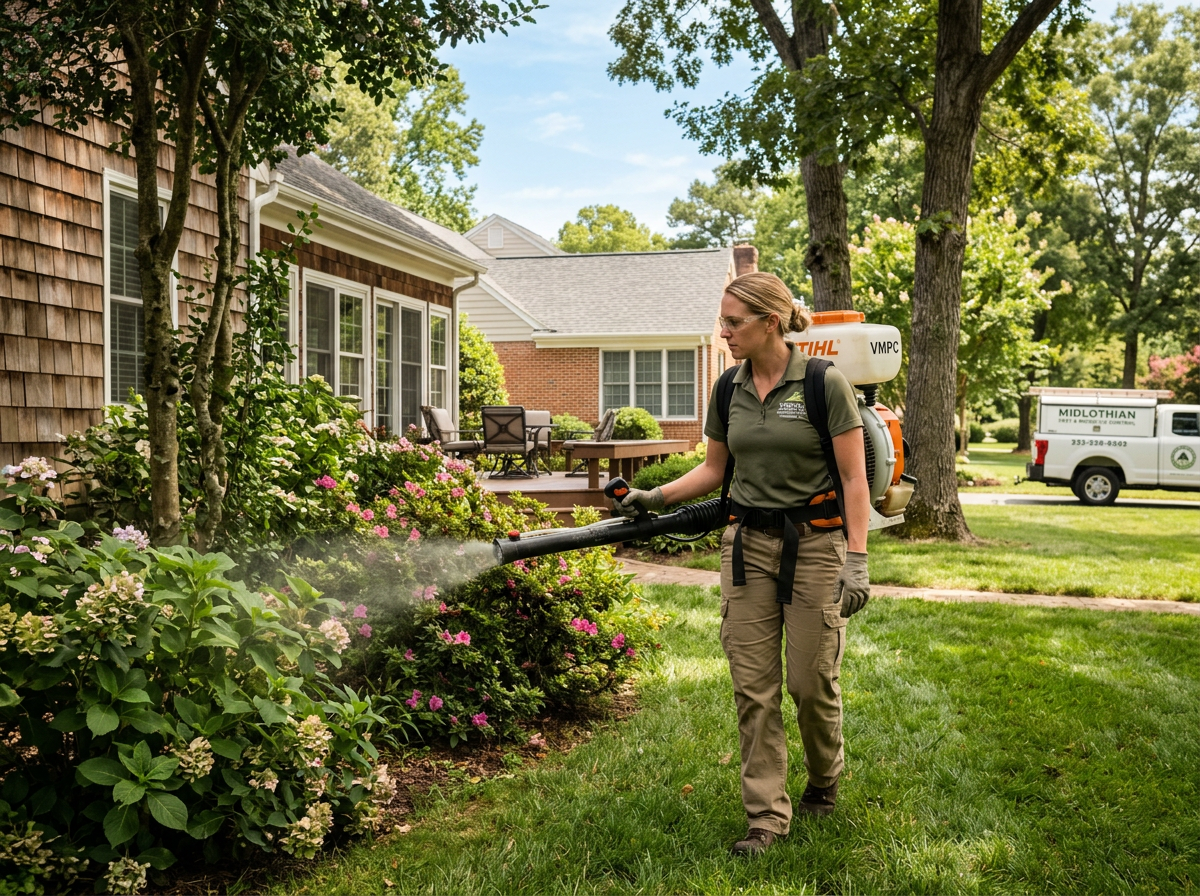
A professional mosquito control visit in Midlothian begins with a detailed property inspection that identifies standing water sources, followed by source reduction and targeted barrier spraying applied to vegetation where mosquitoes rest. Technicians focus on the small containers that hold as little as half an inch of water, since Aedes albopictus can complete its egg-to-adult cycle in seven to ten days under typical Piedmont summer temperatures. The entire initial service usually takes one to two hours depending on lot size, and no treatment occurs until breeding sites are addressed first.
Property Inspection Phase
Technicians walk the full perimeter and any accessible yard areas, checking gutters, birdbaths, plant saucers, and low spots that collect rainwater. In Midlothian’s humid summers, even a single overturned lid or clogged downspout can support dozens of larvae within days. They note shaded resting spots along fences and foundation plantings where adult mosquitoes congregate during daylight hours. This inspection phase also accounts for nearby tidal influences if properties sit closer to the fall line, though most Midlothian addresses deal primarily with container breeders rather than saltmarsh species that travel miles inland from the Tidewater region. The goal remains locating every potential breeding location before any product is applied.
Source Reduction Steps
After the walk-through, technicians empty or treat containers that cannot be removed, such as permanent water features or tree holes. They explain how removing just one inch of standing water from a saucer prevents an entire generation from emerging. Homeowners often receive guidance on weekly checks during the April-to-October season, especially after heavy storms that create new pockets overnight. Source reduction precedes spraying because it addresses the root cause rather than only knocking down adults already present. For residents wanting additional non-chemical options, the process pairs naturally with ongoing property maintenance detailed in related guidance on reducing mosquitoes around Midlothian homes without chemicals.
Application of Barrier Treatments
Once breeding sites are eliminated or treated, a residual barrier spray is applied to lower tree limbs, shrubbery, and fence lines where mosquitoes rest between blood meals. The product targets daytime biters like Aedes albopictus that remain active throughout the longer Virginia daylight hours. Applications avoid open water and blooming plants to protect pollinators. Technicians time visits for early morning or late afternoon when wind is minimal, ensuring even coverage without drift onto neighboring properties. Because Midlothian sits in the Piedmont, treatments also consider how afternoon thunderstorms can wash away residues, often prompting follow-up timing adjustments within the same week.
Follow-Up Visits and Seasonal Timing
Most Midlothian properties receive a second visit seven to ten days later to recheck containers and refresh barrier zones after the first treatment cycle. During peak months from June through September, additional monthly visits help maintain control when storms repeatedly create new water sources. The full season runs April through October, with lighter early-spring and late-fall services focused mainly on source elimination. Residents learn to recognize increased activity after rainfall and can schedule extra visits accordingly. For complete service details across the region, see the full range of mosquito control services offered from the Midlothian base.
Local Species and Regional Factors
Midlothian properties mainly contend with container-breeding Aedes albopictus rather than the saltmarsh mosquitoes that can fly several miles inland from Tidewater marshes. Technicians still watch for any influx after strong coastal storms push additional adults westward. Fire ant mounds occasionally appear in southeastern Virginia pockets and receive separate attention when encountered during the same visit. Understanding these local patterns helps explain why treatments emphasize vegetation barriers over broad-area fogging. Further species-specific information appears in the guide on what Midlothian residents should know about local mosquito species.