2026-09-12 ·
Choosing Larvicide Options Safe For Midlothian Ponds And Streams
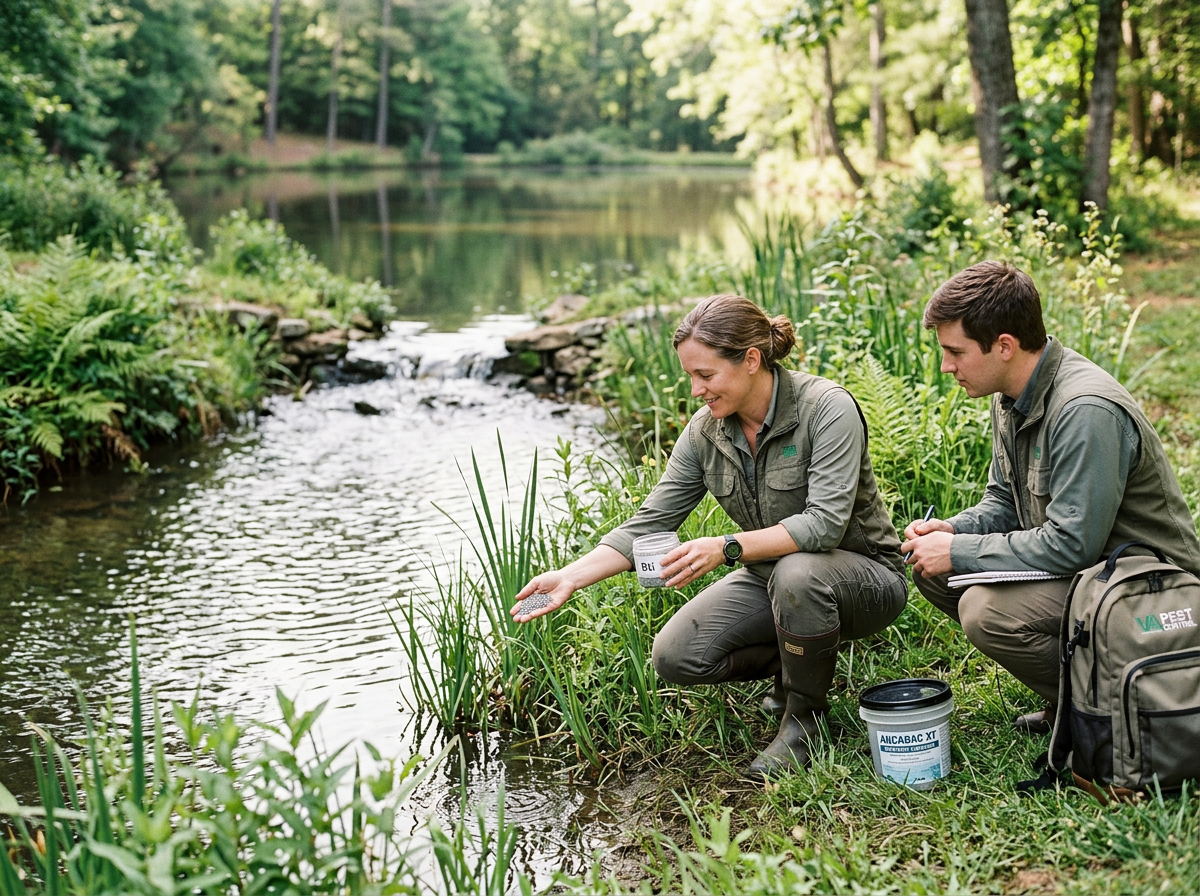
For Midlothian ponds and streams, Bti products applied at labeled rates provide effective larval control without harming fish or beneficial insects when water temperatures stay above 50 degrees. These options work best when containers holding as little as 1/4 inch of water are emptied first, since Aedes albopictus can complete egg-to-adult development in 7-10 days during peak summer heat.
Selecting Bti-Based Larvicides for Local Water Bodies
Midlothian sits in the Piedmont region where ponds and streams receive runoff from residential yards. Bti formulations release toxins only after larvae ingest them, leaving amphibians and crustaceans unaffected at standard doses. Homeowners should choose granular or dunks versions labeled for standing water and reapply every 7-14 days once water temperatures rise above 60 degrees in late April. Source reduction remains the first step before any larvicide reaches a stream edge, because even small backyard containers can produce hundreds of day-biting adults that later move toward larger water bodies. Checking product labels for fish-safe claims prevents unintended impacts during the April-to-October season when rainfall fills new breeding sites after storms.
Timing Applications Around Midlothian Weather Patterns
Larvicide treatments deliver best results when applied within 48 hours after heavy rain events that refill ditches and pond margins. In the Piedmont, water levels often stabilize within three days, allowing Bti granules to reach larvae before they pupate. Applications after October drop below effective thresholds as larvae enter diapause. Property owners who combine these timed treatments with weekly container checks reduce the overall volume of product needed across the season. Linking larvicide use to the same schedule used for barrier spraying keeps adult emergence low without overlapping chemical loads in streams that flow toward the James River watershed.
Combining Larvicides with Source Reduction Practices
Emptying or treating containers before they hold 1/4 inch of water stops Aedes albopictus from laying eggs in the first place. Bti then handles larvae that develop in harder-to-reach pond edges or stream backwaters. Midlothian yards often contain birdbaths, gutters, and tarps that refill after summer storms; addressing these spots first lowers the amount of larvicide required later. Property owners who follow the steps outlined in after-heavy-rain mosquito prevention steps for Midlothian yards find fewer repeat treatments become necessary. This integrated approach also limits drift into streams where saltmarsh mosquitoes from the Tidewater region occasionally travel inland.
Monitoring Results and Adjusting Through the Season
Weekly inspections of treated ponds and streams reveal whether larvae numbers drop within 48 hours of Bti application. Homeowners can use a dipper to sample edges and count live larvae before and after treatment. If counts remain high after two cycles, the next step involves checking for missed container sites rather than increasing product volume. Professional mosquito control services can provide targeted follow-up on larger properties where stream access requires equipment. Keeping records of application dates and rainfall amounts helps refine timing for the following April-to-October cycle and protects downstream water quality in the Piedmont region.